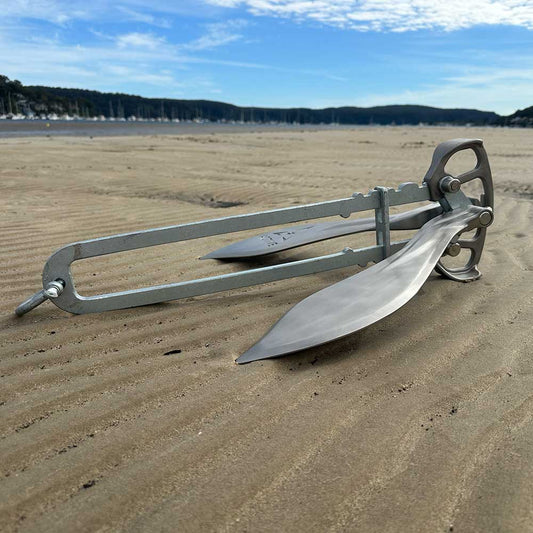
Active anchors for yachts & larger vessels – The special features
Active Anchors of 8kg and over have several unique, patented features, specifically designed to benefit yachts and larger vessels that produce an anchor in a league of its own when it comes to set speed and holding power, due to the self-digging capability.
The most important details.
- Set speed
- Holding power
- Wind / tide change reset
- Scope length
- Weight reduction
Set speed
The reason larger Active anchors set faster than any other anchor, is due to both the intrinsic self-righting capability and pitch lifters that set the anchor up to bight in immediately. As soon as an anchor gets a toe hold, any wave action (coupled with the boat pulling on the rode), allows the spring-loaded shank to push material away from the side of the flukes directing load back to the toe which in turn drives the anchor deeper.
Holding power
Where the spring shank of a smaller Active anchor is utilised to make it releasable, the shank on the larger anchors (DF500 and above) can be used to generate extreme holding power (especially in soft mud) with the addition of a stop, bolted to the rear of the anchor that then turns the shank collar into a variable load, pitch adjustment tool. Learn more here.
Wind and tide change reset
The 450 grade (Bisalloy) steel shank coupled with the fact that an Active anchor has no concave areas or recesses (that can clog with mud) means that even if the anchor is aggressively pulled sideways or lifted from the ground during a wind or tide change, the anchor will reset immediately without doing harm to the anchor.
Scope length
The spring shank of an Active anchors allow for scopes up to 2:1 without relying on the chain. This allows any vessel to maintain position even in tight anchorages like never before. Sound too good to be true? - Learn more here.
Weight reduction
One of the great benefits of Active anchors is simple, weight reduction. Because the stopping power is so good, you can get away with a smaller anchor that weighs less and takes up less space. The knock-on impact of this is, they’re not something you’re going to be worried about lugging on and off the boat, and if the vessel loses power, you can still retrieve the anchor by hand in required. Giving you a primary safety tool that can importantly, either be kept close at hand or thrown from the stern if needed.
However, if you choose is to replace your current anchor with an Active of the same weight, what you then have is an anchor that can double as a storm anchor.
Further reading;
- Why sailing vessels are different
- Wind and tide change reset
- The big difference in mud
- Fluke pitch control
- Long term anchoring
- Rode length, scope and chain
- Metal degradation
- The ground catenary
- Safety and performance - Active pivot stop
- Slide ring use
- Weight & Storage
Why sailing boats are different
Although many yacht owners rarely use their anchor as most of their time spent on the vessel is between marinas, for the cruising yacht community a good primary anchor along with a spare or stern anchor is not luxury, it’s an absolute necessity. As a result, it’s commonplace for them to have a range of anchors on board and have a keen focus on all aspects of anchoring. Which encompasses everything from material composition to fitting setup, and the efficacy of different anchor designs on a broad range of seabeds and substrates. The principal reason for this is, that if you’re going to sleep overnight on a yacht, the lives of all on board are literally ‘on the line’! Which is bound to focus the mind considerably.
Yet beyond the emotive issues, is the fact that long term anchoring on larger vessels brings with it host of problems that are not a problem for small craft and power boats. This includes the fact that wind and anchor loss can be a much bigger issue if you are on a multi hull vessel or a long distance from population. And because the anchors are larger it can be a major problem if there is a loss of power on the vessel as pulling the anchor up by hand may not be an option.

Wind and tide change reset
The major concerns when anchoring overnight is firstly a wind or tide change that either dislodges the anchor and leaves it needing to reset (which it may not do), or that pulls the anchor perpendicular to the original tow direction, putting a large load on the shank and bending it. And secondly, the ability of a given anchor design to hold in soft ground such as mud can be questionable and is hard to define if you have no experience in the area. Tales of waking up and finding oneself in a completely different spot are unfortunately, all too common.

The big difference in mud
One of the chief performance goals of Active Anchors (from the design stage) was to create an anchor that performed exceptionally well in soft ground. It was understood early on that one of the great limitations of ‘static’ anchors is that, even if all the factors of a given anchor design are considered correctly to get the anchor to set on all ground instantly (therefore achieving perfection), a choice still must made as to what the best all-around pitch is. Because if the pitch too steep, the anchor will struggle to set on hard ground, yet if the pitch is too shallow it won’t hold in soft ground and will simply be pulled through the substrate providing no real drag.
The other fundamental issue that affects single fluke anchors is, that in very soft mud, surface area becomes the predominant physical determinant of the anchor orientation. This is because the shank creates the greatest torsional force on an anchor yet has the least surface area, so the shank tends to sink into soft mud first and the broad area of the fluke becomes a parachute that keeps the anchor inverted and therefor ineffective.
Double fluke anchors by contrast, invariably always lie flat on one side or the other however, they are prone to roll and not set. The reason Danforth anchors tend to roll and not set quickly, is because most Danforth anchors have the toe of each fluke close the shank. Therefor the back of the flukes lift as load is applied to the pull point, and the wide stock of the anchor (which is intended to prevent the anchor rolling), creates an imbalance that then amplifies the roll, either due to the intrinsic weight of the stock or because it digs to the ground on one side or the other. This feature of a Danforth makes them (by default), a five point anchor as there are two points (on the stock) that are intended to transfer load to the fluke toes in addition the anchor pull point.
The reason this is not an issue with an Active Anchor is that the fluke toe spread creates a triangular load profile balanced between the fluke toes and the pull point of the shank. Once the anchor has set, surface area becomes the primary factor that increases the drag profile (dependent on the setting of the collar and the density of the given seabed). This means there is no need for a stock as the bulk of the weight of the anchor is close to the toe of the flukes which both prevents the anchor being pulled offline when setting and prevents the anchor getting hung up on retrieval.
Fluke pitch control
The only way to negate the problem created by what may be called the ‘static pitch dilemma’ is to have a floating or variable pitch, that allows the anchor pitch to be adjusted to both suit the density of a given substrate (the initial set angle) and the maximum drag envelope once the anchor is fully embedded into the ground.
Some may see this as an overly complex way of solving the problem and worry that it may take too greater a degree of knowledge to use an Active Anchor, but that in no way negates the fact that this is the best way to ‘STOP THE BOAT’. As the old 6P addict goes – prior preparation prevents piss poor performance. Ignore at your own risk!
Long term anchoring
Long term anchoring is a term that is subjective by nature as a small boat owner may consider overnight to be long term, however a cruising yacht owner may see 3 days as a short stay. Nevertheless, long term anchoring brings with it wear and corrosion issues to rode and anchor, that are not a problem to the lunchtime user. There is also the problem of an anchor sinking deep into the seabed making it difficult, if not impossible to retrieve even in soft mud as ground suction in combination with the size of the anchor and the sheer length of time the anchor has had to bury itself in, may make it difficult if not impossible to retrieve.
However, as the Active flukes have a flat profile, the change of load direction (from largely horizontal to vertical) when retrieving the anchor, helps allow the anchor to negate the effects of ground suction by slipping out of the substrate backward because there is no cupping or bowl effect.
Metal Corrosion/degradation
Material degradation is an issue that Active Anchors as a company takes very seriously with all feasible measures taken to mitigate and reduce the factors and materials that create and sustain both crevice corrosion and galvanic corrosion otherwise known as electrolysis.
Rode length, scope and chain
Rode length and scope can be critical to anchor performance. A detailed explanation of scope selection and the ability to maintain the catenary sufficient to hold a vessel in a range of conditions in comparison to Active Anchors can be seen here https://activeanchors.com.au/pages/load-analysis

Ground catenary
The first catenary on the rode obviously resides between the anchor and the seabed. However, a second catenary that receives far less attention is created on the rode between the anchor and surface of the seabed due to the density of the ground and the drag created by the surface area of the chain, rope or cable that is underground. The reason this is of such importance is that ground density is another highly variable factor that can have a profound effect anchor performance. This is because as the anchor goes below the surface of the seafloor the pull point load direction changes as the second ground catenary drives the anchor back to the surface.
This may act as a benefit in certain situations as it can prevent the anchor from diving too deep into the substrate. However, it may also prevent the anchor from diving deep enough to get into harder ground and therefore stop it from performing its primary function. It’s for this reason cable is often preferred as the rode on commercial craft.
But what this problem highlights once again is, that regardless of the impact of ground density, the ability of an anchor to work effectively on a short scope is paramount in providing an effective anchoring solution.
Active pivot stop - Safety and performance
As yachts are regularly left unattended or unmanned overnight, safety is paramount when anchoring. For this reason Active Anchors 7 Kg and over can be fitted with a pivot stop. As a result, the anchor loses its release function, yet more importantly, gains increased stopping power.

This is because, with a stop in place, the collar can be set to allow the flukes to change pitch with variable force. Because in soft mud, what you need is maximum stopping power, which can only be achieved when the flukes can go to a steep pitch with ease. So, the collar can be set a soft setting by moving it to the first position.
In harder ground the anchor will need a shallow pitch to bite in and won’t need as much surface area to generate the stopping power. So, it can be set to a harder setting by sliding the collar further down the shank.
In most circumstances however, the collar can simply be left in the middle position.

Slide Ring use
The slide ring can be used if there is any chance you may hook a mooring chain or anchor rode. To use it, simply undo the D shackle and reattach it through the ring. (Make sure the shackle pin is done up nice and tight as stainless-steel fittings can work loose if not properly tightened).
If an anchor does get caught under a rope or chain, let the Anchor drop to the seafloor, then without putting load on the rode, slide the ring back away from the obstacle and pull the anchor backward to get it free.
The lumps on the underside of the shank are there to prevent the Anchor ring sliding back to the end of the shank as it's lifted.

Weight and storage.
One of the great benefits of Active anchors is simply, weight reduction. Because the stopping power is so good, you can get away with a smaller anchor that weighs less and takes up less space. The knock-on impact of this is, they’re not something you’re going to be worried about lugging on and off and if the vessel loses power, you can still retrieve the anchor manually if required. Giving you a primary safety tool that can, very importantly, be kept close at hand to be thrown from the stern or used as a kedge if needed.
If you would like to learn more about how Active Anchors work refer to the anchor load analysis page.
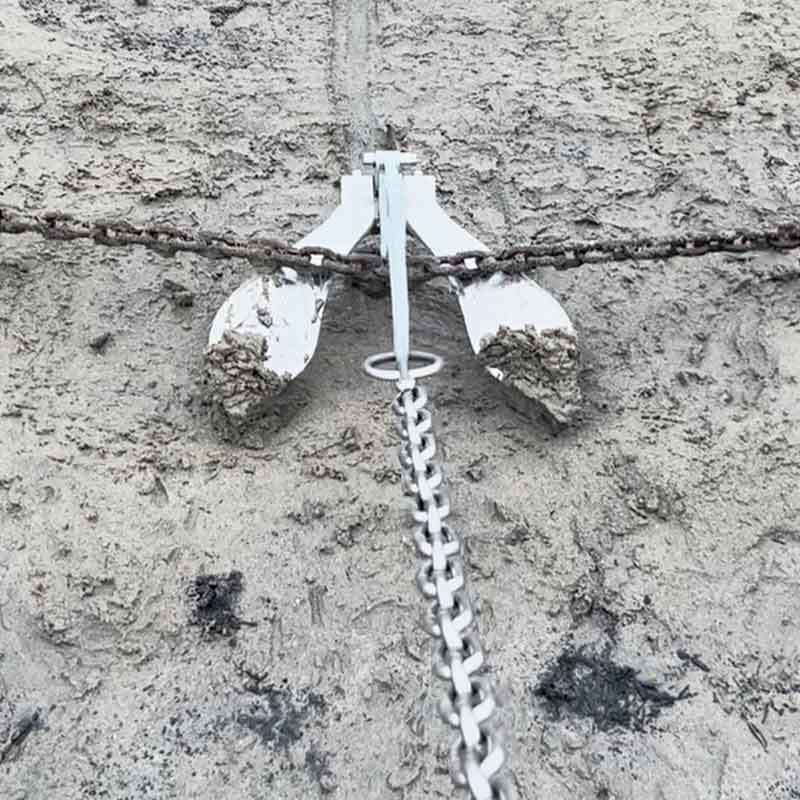
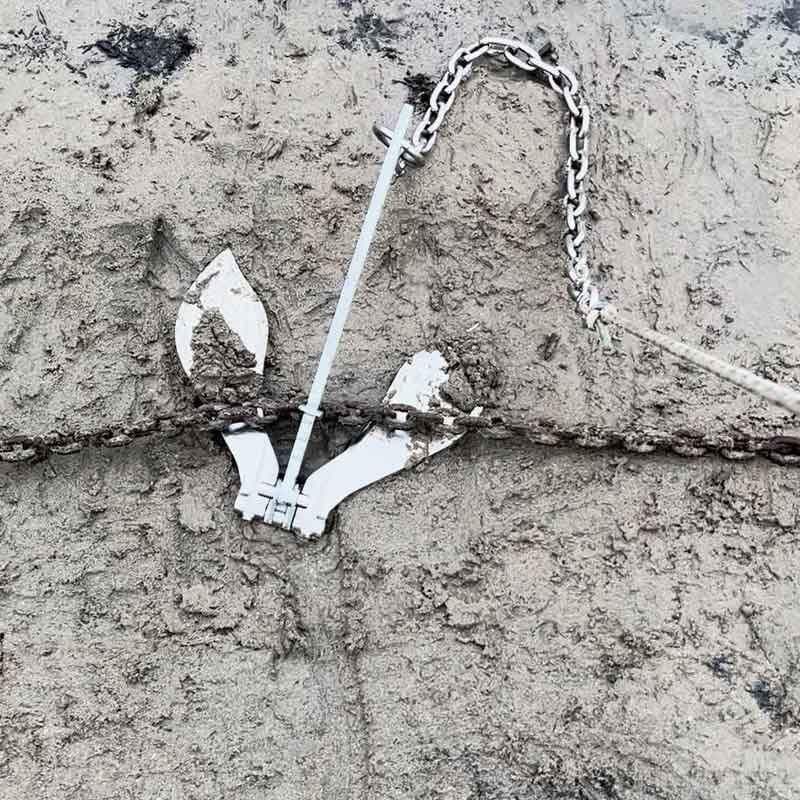
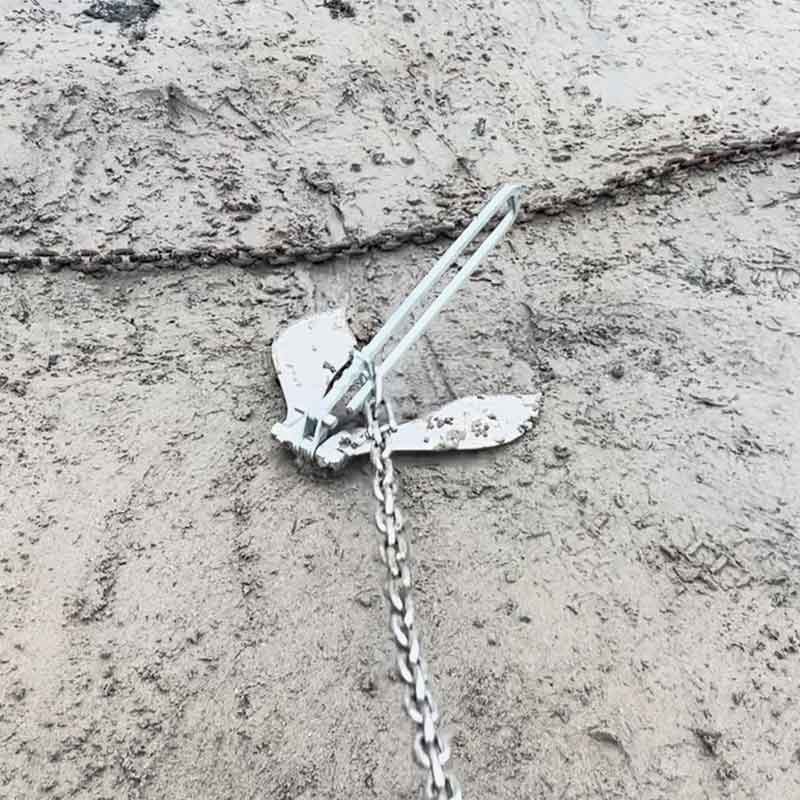
-
ACTIVE DF600 - Anchor for vessels up to 13.5 Metres (45') in length
Regular price $1,195.00 AUDRegular price -
ACTIVE DF500 - Anchor for vessels up to 10 Metres (34') in length
Regular price $695.00 AUDRegular price -
ACTIVE DF200 - Anchor for Kayaks, Jet Skis or Tenders up to 3.5 Metres (12') in length
Regular price $175.00 AUDRegular price