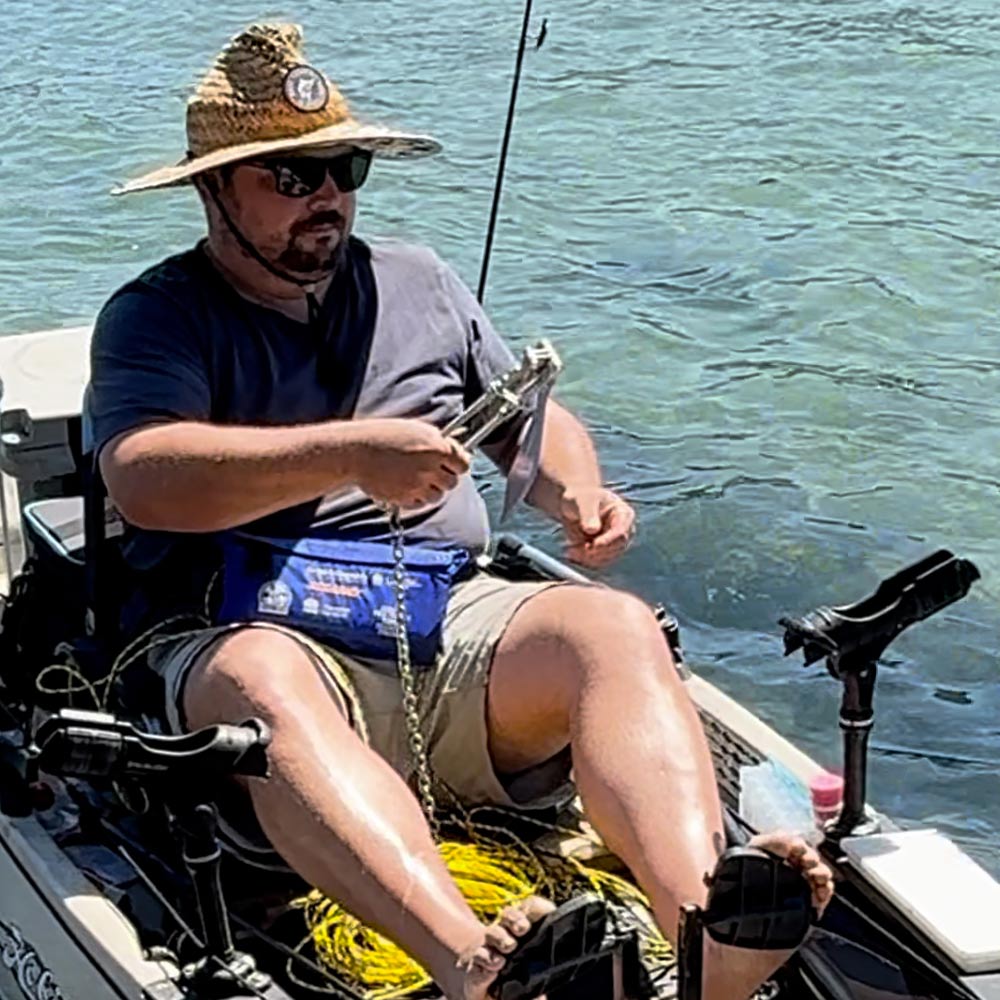
Kayak anchors
Anchor - Kit Kayak
The portability and self-powered nature of a kayak being so close to the water is simply awesome. And the ability to go places no other craft can, takes them to another dimension.

Non the less, because kayaks drift quicker than boats and big waves, or the wake of a passing boat can capsize you, it’s dangerous to anchor over rocky ground (in the structure where the fish often are) because your anchor may get stuck. Therefore, it’s extremely important to be able to release an anchor if it does get stuck. If you’re forced to cut it free, a primary safety device is then no longer available to you.
A lot of kayak users simply don't bother with anchors because they're either too heavy and slow them down or they have tried umpteen types of small anchors and found they simply don't work.
Anchor safety
Anchors are a safety product that can be thought of like a fire blanket. It may be a tool you never need to use. But when you do need one, the realisation a good anchor could have prevented complete catastrophe may not be of much use unless you already have one. As you may not get another opportunity to be better prepared
The variables on the seabed are infinite. No matter what anchor you have, you are going to need one that works just about anywhere. Because you can’t know for sure what kind of ground you are going to be on when you need it.
Common anchors
Due to the size of kayaks and storage constraints, small grapple anchors are the common anchors used. Grapple anchors can hold on hard ground, yet provide almost no stopping capability in sand and are prone to getting stuck.
For all the reasons above there has never been an effective kayak anchor, until now.

Active Anchor DF200 - Releasable, all terrain anchor.
With a total weight of only 1Kg an Active DF200 anchor can safely hold a 10-foot fiberglass boat in a 2 Metre swell, so has no problem holding any kayak, and easily fits the storage compartment of a kayak.
More importantly, Active Anchors can be set to easily release when the rope is pulled vertically. This is made possible due to a high tensile steel shank and toggle action release mechanism.
The release function has 4 settings from soft to lock (no release), however what is not immediately obvious is that the soft setting does not greatly reduce the holding power of the anchor in sand, mud or shale. This is because the flukes are held in a relatively static position in soft ground, which pushes the flukes backward toward the rear of the anchor keeping the spring links in their normal anchoring position.
The release function allows you to anchor with confidence on rocky ground knowing that you can get away with ease and not be concerned about falling in trying to pull up the anchor. Active Anchors provide the opportunity to safely fish from a kayak in challenging locations where the fish tend to be.
The tremendous benefit of these anchors cannot be understated. It’s akin to thinking of driving a car without suspension. It can be done, but now we have good suspension systems, not using them would be considered ludicrous.
The real saving
Saving money on safety may result in payment of the ultimate price. So, if you only have one anchor, make sure it is the best, most versatile one you can get. Its why Active Anchors are manufactured in Australia using the best materials available. There is no substitute for quality when your life relies on it.
The inspiration behind Active Anchors came watching a boat float away from the beach on a beautiful day in a sheltered place in mild conditions. The anchor we had was useless and the need to watch the boat constantly detracted from the day and focused minds on safety and the need for a better tool for the job.
All anchors in one, superior performance on all ground.
Active Anchors – Embracing the forces of nature!